

The Garden Club of the Northern Neck
March 21, 2022
The mission and purpose of The Garden Club of the Northern Neck shall be the restoration of historic gardens, the conservation of natural resources, the beautification of the area served by the club and the promotion of horticulture. The mission is implemented locally throughout the Northern Neck and extends statewide through membership in the Garden Club of Virginia. The club’s diverse, energetic and accomplished membership is unique in its focus on community outreach.
The Garden Club of the Northern Neck was organized in 1966 by two members from each of four counties — Lancaster, Northumberland, Richmond, and Westmoreland. GCNN was mentored by The Rappahannock Valley Garden Club until 1969 when it was invited to join the Garden Club of Virginia. GCNN later mentored The Garden Club of the Middle Peninsula until that club’s admission into the Garden Club of Virginia in 1999. The three clubs maintain a close relationship, holding a tri-club luncheon each year to celebrate their heritage and to host the President of the Garden Club of Virginia.
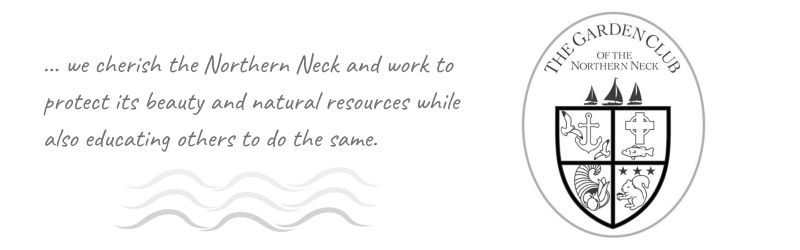
Charter member Mrs. Treadwell Davison, and founding member, Mrs. J. Garland Pollard, Jr., designed the club logo of sailing ships to commemorate Captain John Smith’s expedition to Jamestown and his exploration of the Chesapeake Bay and “Ye Northern Neck.” A shield represents the four counties from which membership is drawn. The anchor and seagulls represent Northumberland; the cross and fish represent Lancaster County; the cornucopia, a symbol of plenty, represents Richmond County; and the three stars from the Washington family coat of arms and the squirrel from the Lee family coat of arms represent Westmoreland.
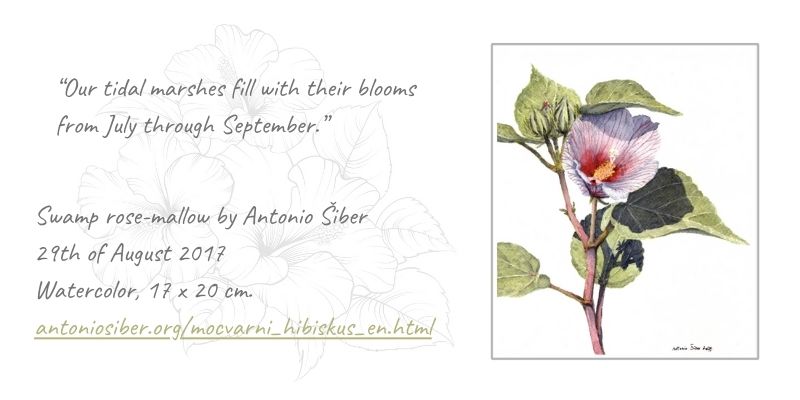
The club selected the Hibiscus moscheutos (swamp rose mallow) as its official flower.
The club’s community outreach projects welcome visitors to the Northern Neck and include two GCV restoration properties and two Virginia State parks.
Historic Christ Church in Lancaster
“With the restoration of the church nearing completion in the mid-1960s, the leadership of the Foundation for Historic Christ Church turned to the Garden Club of Virginia for assistance in providing an appropriate landscape that would complement this historic structure. The club’s plan, formulated by landscape architect Ralph E. Griswold, was restrained and predicated on a desire to provide unobstructed views of the church itself. Members of the foundation and the club also desired to pay homage to “King” Carter’s beneficence in one way by recreating the “row of goodly cedars” that, according to local lore, had run between the church and Carter’s nearby mansion on the Corotoman River.
‘The resulting design placed the obligatory parking area as far from the church as property boundaries would allow, obscured from sight by a combination of holly trees, willow oaks and magnolias. Nearer the building, day lilies provided important ground cover to areas not cleared for the expansive lawn. The club also helped with the cemetery section that falls outside of the walls surrounding the church. The cemetery lies just to the south of the brick walkway through the cedars that brings visitors to the stately entrance of a most handsome and historically important edifice.”
Stratford Hall in Westmoreland
“Stratford passed out the hands of the Lee family in 1822, and through a succession of owners gradually fell into disrepair. A group that came to be known as the Robert E. Lee Memorial Foundation purchased the property in January 1929 and began the re-establishment of the property as a working plantation. In June of that year, the group approached the Garden Club of Virginia about restoring the Stratford gardens. The club enthusiastically accepted the challenge, raising funds for the project through individual gifts and the proceeds of its Historic Garden Week tours of 1930 to 1932.
“The garden club first engaged Arthur Shurtleff (who later changed his name to Shurcliff), a Boston landscape architect working on the Colonial Williamsburg restoration, to undertake initial archaeological investigations. In his December 1929 report to the Stratford Committee, he declared “there is no ancient place in Virginia which would be more interesting to restore or more fruitful of results.” Subsequent survey work was conducted by Herbert A. Claiborne of Richmond and by Harvard School of Landscape Architecture associate Morley J. Williams, who in 1932 was hired to draw plans for the restoration. The basic restoration work was complete by 1936, although additional restoration managed by Alden Hopkins, a later landscape architect at Colonial Williamsburg, occurred during the mid-1950s.”
Belle Isle State Park
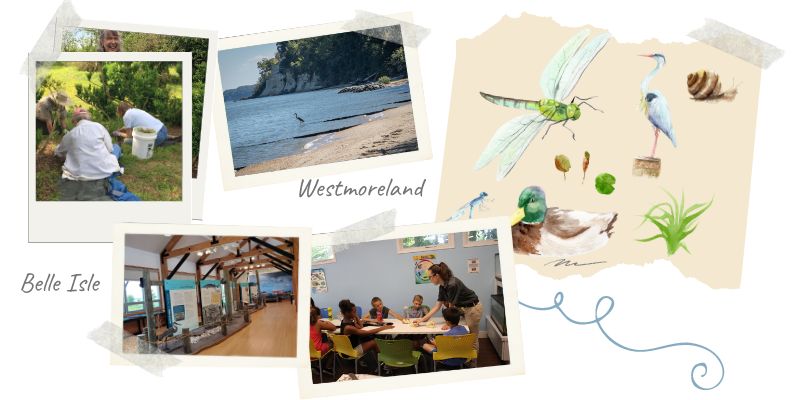
“The Garden Club of Virginia centennial grants have allowed Belle Isle State Park to achieve so much. We revived our open-air hay wagon, created new pollinator habitat throughout the park, opened an educational visitor center exhibit focusing on the history and culture of the Northern Neck of Virginia, and completely rehabilitated the gardens and grounds of the historic Belle Isle Manor House. These projects have also provided us the opportunity to connect with our community in new ways – with volunteers logging more than 1,300 hours to support these efforts. Thank you for making all of this possible.”
Katie Shepard, Park Manager
Westmoreland State Park
“The Garden Club of Virginia drastically increased the capability and quality of environmental education programming at Westmoreland State Park through Centennial Grant Funds donated to renovate the Discovery Center, which re-opened in May 2019. Interpretive program attendance doubled in 2019, reaching 20,760 people, many of whom attended programs on field trips utilizing the Discovery Center. Westmoreland State Park would like to thank the Garden Club in their involvement in building naturalists, history enthusiasts, and conservationists through quality educational programming at Westmoreland State Park, as well as for the Garden Club of Virginia’s continuing involvement with Virginia State Parks.”
Michael Such, Chief Ranger Visitor Services
Westmoreland State Park
Fundraising, Grants and Scholarships
Fundraising, key to implementing the club’s mission, provides funds for outreach and has included: a luncheon at Indian Creek Country Club with a flower arranging demonstration by a floral designer who earned her craft in London’s posh West End; a presentation by a landscape architect with refreshments at Good Luck Cellars’ event venue; and raffle opportunities for selected homes to be decorated for the holidays, one in each of the four counties. Each May, the club holds a sale of donated gardening books, magazines and plants from members’ gardens. Sale locations alternate among the four counties.
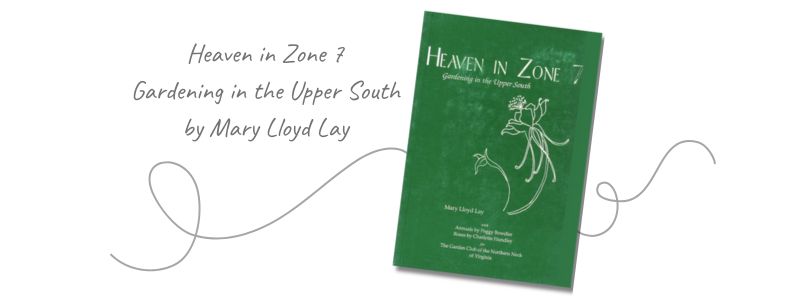
GCNN club member Mary Lloyd Lay established an endowment fund for the club in 2009 with proceeds from her book, Heaven in Zone 7, emphasizing the importance of having a strong financial basis to meet club obligations. Members have generously contributed to the fund since its founding, and interest earned provided support when the club hosted the 2019 GCV Board of Governors.
Local outreach projects include beautification awards for civic, commercial, professional establishments and/or individuals who have made a significant effort to improve the appearance of their surroundings, which must be visible to the public. Awards of recognition are given in each of the four counties and presented in the spring. Award recipients have included historic Holley Graded School in Lottsburg, Warsaw Elementary School, Totuskey Tricentennial Park, Reedville Fisherman’s Museum and Vine Wine Bar in Irvington.
The GCNN and the Garden Club of the Middle Peninsula host an annual conservation forum each fall on a rotating host club basis. Forums are free to the public and seek to educate the community on topics of interest in a fragile ecosystem. Distinguished speakers have addressed topics such as: The Chesapeake Bay, Federal and Local Perspective, Preserving our Marshes; Planned Growth for Better Communities; Rural Landscape Preservation; Pesticides: Your Health and Food; and Solar Farms Pros and Cons.
The club established a committee in 1999 to administer grants for partner organization with projects that fulfill GCNN’s mission. The committee handles publicity, selection of grantees and follow up projects. In 2023, grants totaled over $3,000. The club has also offered Share the Wealth grants when funding was available, and scholarships to the Chesapeake Bay Foundation’s week-long Teachers on the Bay program.
In 2022, GCNN established an emeritus membership category for those who have exceeded 40 years of membership. Also in 2022, the club established a mentor program to support incoming members during their first years, providing a firm and informed foundation for their membership in GCNN and GCV.
Monthly club meetings promote education in areas related to conservation, preservation, restoration to members and, frequently, to the community. Programs feature gifted and talented speakers who have offered a wide range topics — hydroponic farming, crescent line arrangements, farming and farm markets, photography tips, landscape planning, traditional and ikebana flower arranging, flower arranging toolboxes, Chesapeake Bay Foundation, herb ideas and organic fertilizers.

In addition to monthly club programs, members have enjoyed recent field trips to Grelen Nursery in Orange, Tuckahoe Plantation in Goochland County and the Lowline in Richmond.
In 2016, the club began its first digital newsletter — Hot Garden Flashes. Initiated by then GCNN President Carter Filer and member Maureen Capelli, the format has expanded since that time and now includes a greeting from the president, a listing of upcoming programs and speakers, and articles written by the chairmen of horticulture, conservation, photography and flower committees. Colorful photographs document club activities.
The Garden Club of the Northern Neck produces a comprehensive yearbook annually. What began as a small, pocket-sized notebook during the club’s early years is now exclusively digital and includes member photographs with contact information, listings of monthly programs and job assignments, club bylaws, club history and GCV information. The program theme for the year is depicted in a cover photograph.
Due to the COVID-19 pandemic in 2020, club meetings were suspended from March to September. Historic Garden Week was canceled and the club began holding Zoom meetings. When restrictions lifted in the fall of 2021, members resumed meetings at the Hague Winery, Historic Christ Church, various parish halls, Stratford Hall, Sabin Hall, and George Washington’s birthplace.
Garden Club of Virginia
GCNN enthusiastically supports GCV projects and activities. Members participate in annual GCV flower shows, having received numerous ribbons for individual and InterClub horticulture and artistic entries.
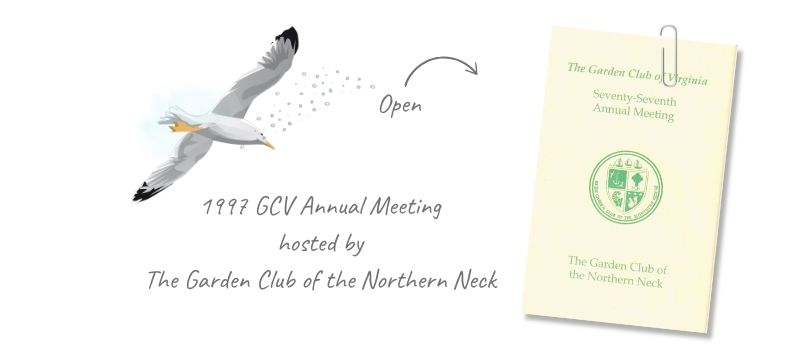
The club hosted 77th Annual Meeting on May 13-15, 1997, at the Tides Inn in Irvington, co-chaired by Kay Cardwell and Mary Chester Griffith.
The Board of Directors met on Tuesday, May 13, 1997, at the Northern Neck home of Kathy Dunton, an eighteenth-century historic landmark called “Verville,” offering a spectacular view of the Corrotoman River. Following the board meeting, attendees were invited to cruise aboard the Tides Inn boat, “Miss Ann,” followed by a delicious seafood dinner.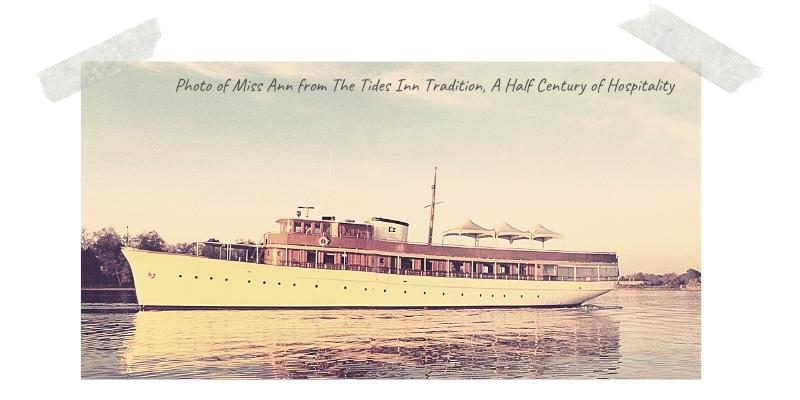
Betty called the Annual Meeting to order at the Tides Inn on Wednesday morning and thanked members of the Northern Neck Garden Club for their gracious hospitality. Northern Neck President Ann Terhune welcomed attendees and called on Helen Murphy, founding member of the Garden Club of the Northern Neck, former President of the Garden Club of Virginia and current Restoration Committee Chairman to present the club’s history.
Helen spoke of the early club days — originally an auxiliary club of the Rappahannock Valley Garden Club, the Garden Club of the Northern Neck was founded in 1966, with members from Lancaster, Northumberland, Richmond and Westmoreland counties living as far as 75 miles apart, and was invited to join the Garden Club of Virginia in 1969. The club has planted wildflowers on nature walks at Stratford Hall and at George Washington’s birthplace, created a planting around the Chinn House at Rappahannock Valley Community College in Warsaw, and a white garden at Rappahannock Westminster-Canterbury.
Helen continued, “Mary Lloyd Lay started a monthly club newsletter of announcements, plant news and club recipes. A contest winner provided the name ‘Hot Garden Flashes.’ Mary Lloyd also began the practice of wearing a sign around her neck with the Latin name of a plant on it and insisted she be addressed by that name during the meeting. We did fairly well with Mertensia virginica, but balked a bit when we got to Ilex vomitoria, especially during lunch.”
Helen closed her history, “We hope that this Annual Meeting will run a bit more smoothly than the 1983 one when the after-dinner entertainer enjoyed far too much before-dinner libation to perform and, at the business meeting the next morning, the chairman of the meeting, Pat Carter, filled in with song and dance because the speaker had to cancel at the last minute.”
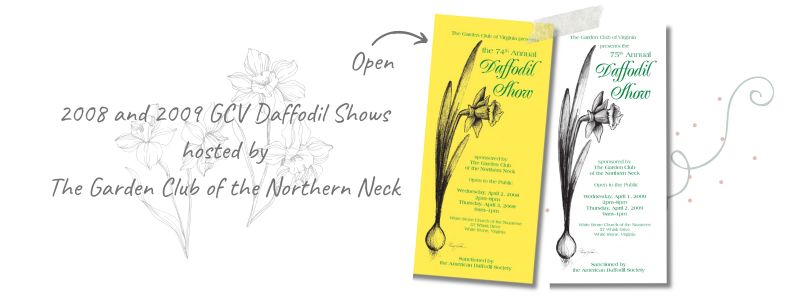
The club hosted the 2008 and 2009 GCV Daffodil Shows at White Stone Church of the Nazarene, chaired by Candy Carden and Suzanne LaPrade.
View 2008 Daffodil Show Photos
View 2009 Daffodil Show Photos
Founding GCNN member Helen Murphy served as GCV President from 1992-1994, and was active for many years. Members continue to serve on GCV committees.
Historic Garden Week tours feature historic properties throughout the four counties and attract visitors nationwide.
2019 Board of Governors
GCNN hosted the 2019 Garden Club of Virginia Board of Governors at Historic Stratford Hall on October 15-17. The al freso Dutch treat dinner was held Tuesday night at Ingleside Winery. Attendees were invited to tour Westmoreland State Park on Wednesday and, following the business meeting, the awards banquet was held beneath the tented grounds of Stratford Hall.
GCNN Presidents 1996-2020
| 1996-1998 | Ann Terhune |
| 1998-2000 | Candy Carden |
| 2000-2002 | Tish King |
| 2002-2004 | Peggy Federhart |
| 2004-2006 | Suzanne Laprade |
| 2006-2008 | C.J. Carter |
| 2008-2010 | Gin Harris |
| 2010-2012 | Lois Spencer |
| 2012-2014 | Becky Marks |
| 2014-2016 | Johanna Carrington |
| 2016-2018 | Carter Filer |
| 2018-2020 | Kate Muller |
“The Garden Club of Virginia exists to celebrate the beauty of the land, to conserve the gifts of nature and to challenge future generations to build on this heritage.”
These worthy goals have guided the Garden Club of Virginia since 1920.
> Learn More
© 2008-2026 The Garden Club of Virginia. All Rights Reserved