

Restoration and Research Fellowships
January 7, 2022
Chairman Helen Murphy, The Garden Club of the Northern Neck
A request from the Rosewell Foundation, seeking Restoration Committee advice on how to proceed with developing the site, prompted a visit by the committee on June 11, 1996. Rosewell History
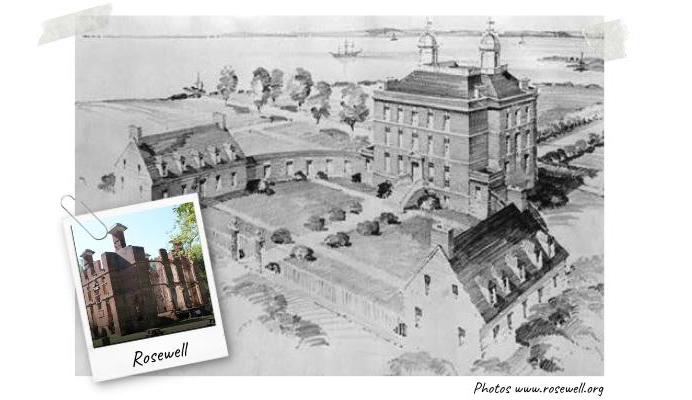
The committee authorized GCV Landscape Architect Rudy Favretti to offer guidance toward approaches for presenting historic landscape and integrating a proposed visitor center with pedestrian circulation and historic landscape. The committee agreed to provide funds for a detailed survey of Rosewell.
Committee members followed the visit with a delicious lunch hosted by former committee member Connie Ingles at White Marsh Plantation before crossing the Rappahannock River to visit Christ Church, Lancaster County, which looked well-tended. Then up the Northern Neck to Stratford Hall where they met and stayed at the Cheek Guest House and had dinner with the new Executive Director Dr. Junius R. Fishburne, and his wife. Before meeting the next morning, members visited Stratford Hall’s East Garden.
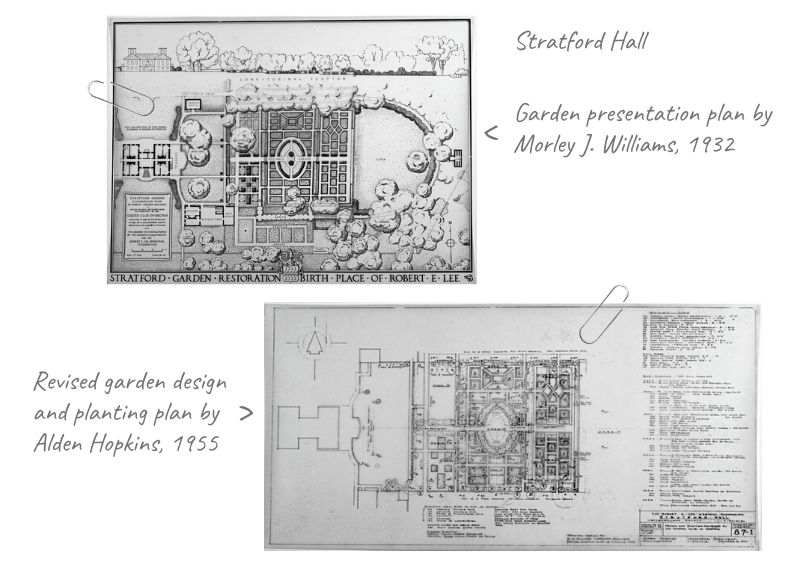
Business continued with the following actions: agreed to contribute toward reconstruction of the wall between the Emily Smith Terrace and the Bowknot Garden at Woodrow Wilson Birthplace that collapsed completely just before Historic Garden Week; authorized Mr. Favretti to work on a master churchyard plan for St. John’s Church, Richmond; and authorized Mr. Favretti to address staff concerns in regard to the original plan for the East Garden at Stratford Hall.
In the fall of 1996, the committee gave permission to Kenmore for brick paving in sand in the kitchen yard; agreed to extend brick walkway and update landscaping at Ker Place; gave permission to Scotchtown to move boxwood; agreed to plant additional trees, flowering vines and flowers in the East Garden at Stratford Hall; approved the Favretti plan for Fredericksburg’s Washington Street Mall; provided funds for a detailed survey of Rosewell, adding “the Restoration Committee no longer funds site archeology;” began plans to plant 29 trees at Maymont; and made the decision to update garden brochures.
Because nearly all restoration properties were having trouble with boxwood, the committee sponsored a boxwood workshop in March at Stratford Hall. Lynn Batdorf from the National Arboretum and Hollin Woolley from Colonial Williamsburg offered lectures and demonstrations on pruning and other cultural practices.
In the winter and spring of 1997, Restoration Chairman Helen Murphy reported on the need for long-range planning at Gunston Hall; tree planting and edging borders at Bacon’s Castle; minor updates at Centre Hill; brick walkway at Fincastle; removal of unauthentic and deteriorated gazebos at Kenmore; upgrade to irrigation at Montpelier; and extensive work on formal garden and boxwood circle at Woodlawn.
Restoration records were turned over to the Virginia Historical Society duing the spring of 1997.
Helen reported on an article in Albemarle Magazine by Murray Howard, Curator and Architect of the University’s Academical Village:
“By sponsoring restoration of the gardens during the middle decades of this century, the Garden Club of Virginia has demonstrated landscape philanthropy at its best. They are, in my view, a perfect example of altruists who benefit everyone revealing the beauty of Virginia gardens to our visitors and to those who use the gardens daily in much the same way the greater gardens of Europe have long been offered to the multitudes. The Garden Club of Virginia has repeatedly proven itself to be a sustaining agent for good, never flagging in their devotion to this important historical site.”
Mr. Favretti spoke to attendees at the 1997 spring Annual Meeting about recent projects at Maymont, Rosewell and Woodlawn, then introduced Mr. Mario Herrada, the first Garden Club of Virginia Fellow.
Maymont Restoration Project 1996-1998
The Garden Club was asked to make a significant contribution to the restoration of six acres of ornamental grounds immediately surrounding Maymont, the magnificent late Victorian mansion located in the center of Richmond. GCV Landscape Architect Rudy J. Favretti described Maymont as one of the finest late Victorian residences in the United States because it retains all of its architectural details plus interior furnishings. The grounds, of utmost concern to the GCY, still display the eclectic landscape so popular during the end of the past century. Mr. Favretti noted that few archives in recent times have offered so many photographs, paintings and other graphic images; plans, sketches and written comments; orders for plants and letters about them; and actual site evidence. Because of these extensive resources, the restoration of the ornamental grounds at Maymont will be one of the purest restorations that the GCV has done in recent times.
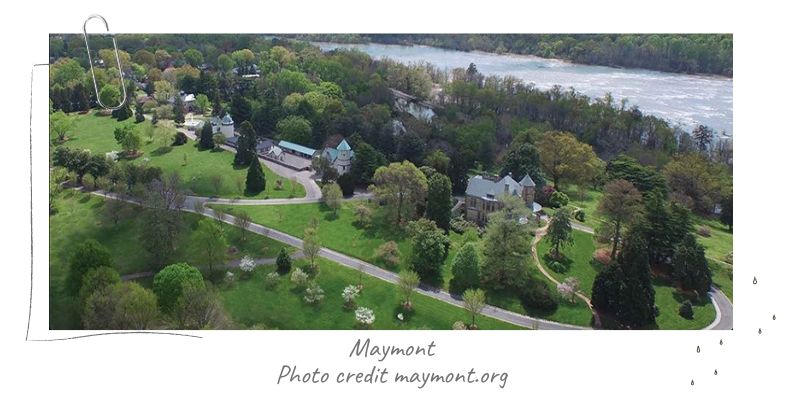
Spanning two years, the project began in 1996 with the planting of 61 trees and shrubs surrounding the mansion, infilling with 27 species of plants. Work continued into 1997 to restore the Dooleys’ 1890s shrub labyrinth, based on studies of old aerial photographs and observance of grass coloration. According to Favretti, this type of shrub planting was popular on some British estates in the 18th and 19th century. Thomas Jefferson planned several shrub labyrinths at Monticello, where one was reproduced in 1978. Maymont’s west lawn shrub labyrinth included over 150 shrubs.
The final stage of the extensive Maymont restoration included the replacement of a hard-surfaced gravel walk system and the three large, iron rose arbors, located on the brow of the south lawn overlooking the James River.
Summer and fall of 1997 brought visits to Smithfield (westernmost property) on the Virginia Tech campus, Fincastle Presbyterian Church, Lee Chapel and the President’s House on the Washington and Lee University campus in Lexington, Belle Grove, Burwell-Morgan Mill and Oatlands.
Business discussions included the inability of Prestwould near Clarksville to maintain the restoration work done by GCV over a 20-year period at that property and the endorsement of the nomination of Mr. William Amherst Vanderbilt Cecil for the Historic Preservation of Medal for the splendid work he has done at Biltmore in Ashville, as requested by the French Broad River Garden Club of Asheville.
Completed and “in progress” work included plantings at Ker Place; replacement of a large elm tree (struck by lightning) at Belmont; fence repairs at Smithfield and Centre Hill; landscape plans at the Historic St. John’s churchyard; Kent-Valentine House trim work repair and painting, landscaping, installation of new irrigation and lighting, brickwork and planting in the rear of the building; and the two-year Maymont project to be completed Fall 1997. Darrin Alfred, 1997 Garden Club of Virginia Fellow, completed work at Eyre Hall.
Rudy Favretti, Garden Club of Virginia Landscape Architect for 20 years, announced his retirement to be effective July 1998.
The committee met in Richmond at the Virginia Historical Society in January 1998. Lee Shepherd, VHS Archivist, explained how the Restoration Committee records have been preserved. Committee members visited St. John’s Church where extensive tree pruning and removal were scheduled. Helen later reported, “Some of you may have heard on television or read in the paper about neighbors protesting the removal of mostly diseased and hazardous trees in the St. John’s churchyard in Richmond, which was part of the master plan done by Mr. Favretti and commissioned by the Restoration Committee.” Helen visited St. John’s and met with the leader of the protestors and reported, “I think she now understand what we are trying to accomplish at this site. The vestry, Commission of Architectural Review, and the City Council all approved Mr. Favretti’s plan before the work was begun.”
Committee members also visited Maymont in the pouring rain where the restoration of ornamental grounds immediately surrounding the mansion is complete, minus a few shrubs that were slated for spring planting.
Mr. Favretti was authorized to proceed with plans for the Moses Myers House garden in Norfolk, and concepts of possible projects at Mount Vernon Bowling Green and the Entrance Court at Washington and Lee’s Lee Chapel were initiated and later approved. “Because of financial contraints currently being experienced by the Prestwould Foundation, Mr. Julian Hudson, Director and Chairman of the Board, and his board requested permission to cut back on the scope of Lady Skipwith’s Garden in order to reduce maintenance. The Restoration Committee and Mr. Favretti felt as though such a move would compromise the integrity of the garden. After much deliberation and with regret, the committee voted to “release Prestwould from its obligations to the GCV according to our 1980 contract and to state our willingness to consider revisiting Prestwould in the future if the financial situation there changes.” This decision will enable Prestwould to cut back whatever portions of the garden it finds necessary in order to meet it budgetary constraints.
After an extensive search for a Landscape Architect to replace Rudy Favretti upon his July 1998 retirement, William D. Rieley of William D. Rieley and Associates in Charlottesville was selected.
Research Fellowships
View Fellowship Research Archives
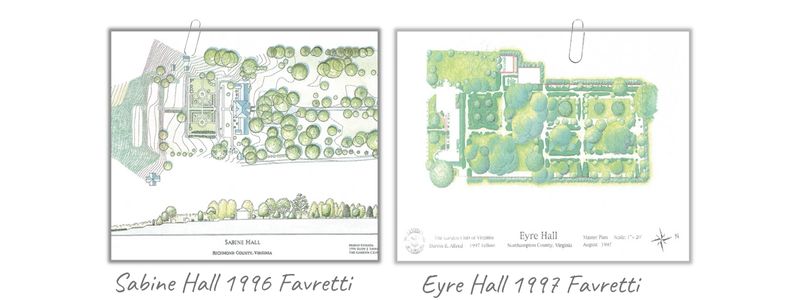
The first Garden Club of Virginia Fellowship in landscape architecture was offered in 1996. Mario Herrada, a graduate student in landscape architecture at the University of California, Berkeley, was selected to spend that summer researching and documenting the gardens at Sabine Hall in Richmond County on the Northern Neck. Built in 1730, Sabine Hall was the home of Landon Carter. Herrada produced original drawings, watercolor rendering, photographs and papers.
The 1997 Garden Club of Virginia Fellow was Darrin R. Alfred, a B.A. graduate in Architectural Studies from the University of Pittsburgh and a graduate student in Landscape Architecture at the New School of Architecture and Planning at the University of Colorado in Denver. His research produced measured drawings of the ornamental grounds at Eyre Hall, a stately 18th-century home near Eastville on the Eastern Shore.
No candidate was selected for the 1998 GCV Fellowship, given the imminent retirement of Rudy Favretti and the lack of a qualified candidate.
Upon Favretti’s retirement, the Garden Club of Virginia Fellowship was renamed the Rudy J. Favretti Fellowship.
“The Garden Club of Virginia exists to celebrate the beauty of the land, to conserve the gifts of nature and to challenge future generations to build on this heritage.”
These worthy goals have guided the Garden Club of Virginia since 1920.
> Learn More
© 2008-2026 The Garden Club of Virginia. All Rights Reserved